KARNIM Capsules
KARNIM is a combination of proven anti-diabetics fortified with potent Immunomodulators, Antihyperlipidemics, Anti-stress & Hepatoprotectives of total plant origin.
The formulation of KARNIM is based on ancient ayurvedic references, further corroborated through modern research & clinical trials at major medical institutes.
KARNIM - A UNIQUE REMEDY FOR DIABETES
KARNIM acts on different sites in different ways to effectively control factors & pathways leading to Diabetes Mellitus. Synthetic anti-diabetics act on one site in only one way.
KARNIM is the only drug to correct the cause as well as effects, besides the condition itself. lt attacks the various factors which precipitate the diabetic condition & corrects the degenerative complications which result because of diabetes.
KARNIM is safe & effective in managing Diabetes Mellitus as a single agent supplement to synthetic anti-diabetic drugs.
KARNIM helps overcome resistance to oral hypoglycemic drugs when used as adjuvant to cases of uncontrolled diabetes.
KARNIM confers a sense of well-being in patients & promotes symptomatic relief of complaints like weakness, giddiness, pain in legs, body ache, polyuria & pruritis.
MANAGEMENT OF DIABETES USING KARNIM CAPSULES
KARNIM is a specially formulated capsule containing ingredients that directly or indirectly contribute in controlling diabetes.
A combination of herbal drugs with varying modes of action, KARNIM exerts its anti-diabetic activity in several ways.
| INGREDIENTS | QUANTITY / CAPSULE |
|---|---|
| Momordica charantia (Karela) | 150 mg. |
| Azadirachta indica (Neem) | 75 mg. |
| Ocimum sanctum (Tulsi) | 75 mg. |
| Picrorhiza kurroa (Kutki) | 35 mg. |
| Zingiber officinale (Sounth) | 30 mg. |
| Pure Commiphora mukul (Shudha Guggul) | 35 mg. |
INDIVIDUAL MONOGRAPHS ON CONTENTS OF KARNIM
Momordica Charantia (KARELA)
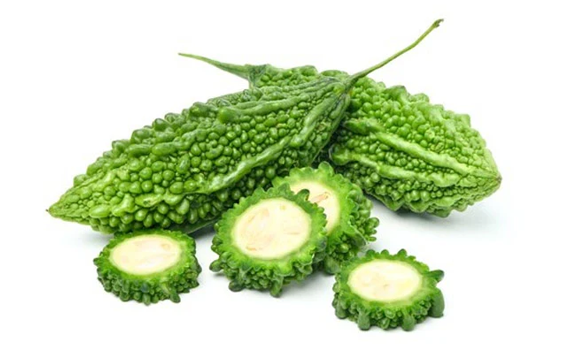
Popularly called by researchers as 'Plant Insulin'. M. charantia has been so named because the fruit contains a polypeptide made of 17 amino acids out of which 16 are similar to crystalline insulin of bovine origin 1,2 which has also been found to be effective in clinical trials in primary diabetes3,4. Understandably most of the anti-diabetic actions of M. charantia are insulin-like5, due to polypeptide & charantin:
• Decreases glycogenolysis.
• Decreases gluconeogenesis.
• Retards proteolysis & promotes protein synthesis.
• Retards lipolysis & promotes storage of fatty acids Thus, M. charantia exerts its corrective influence in controlling diabetes by normalising the insulin deficiency status.
An alternative hypothesis suggests the mediation of anti-diabetic action of M. charantia through its role as a potent scavenger of superoxides & hydroxyl radicals. These radicals have been clearly indicated as causative factors of the diabetic condition6. Indeed, the body itself possesses enzymes such as a superoxide dismutase which routinely protect the B-cells in pancreas through their scavenging action7,8,9. The free radical scavenging anti-diabetic role of M. charantia suggests an additional prophylactic role as many diabetogenic chemicals like alloxan, streptozotocin, pyrinuron, food nitrosoamines, cyanogenic glycosides such as linarnarin10,11 & other sources of dietary cyanide induce diabetes through damage to pancreatic B-cells via free radical generation12.


Azadirachta indica (NEEM)
A widely used drug in Ayurveda, gaining ever-growing popularity in modern times. A. indica, the next important ingredient in KARNIM shows its anti-diabetic action by stimulating the insulin secretion by the B-cells of Islet of Langerhans of the pancreas in a manner similar to the sulfonylureas like chlorpropamide5
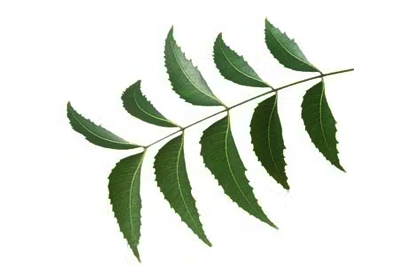
One of the active principles is Nimbin. Besides correcting diabetes by increasing the insulin levels in blood circulation, A. indica also normalizes the body's immune system13 that deteriorates in diabetic conditions due to loss of body proteins12.

Zingiber officinale (SOUNTH)
Like A. indica, the therapeutic role of Z. officinale in diabetes is bivariant. Its primary action in treating hyperglycemia is mediated through its stimulatory effect on B-cells to secrete insulin. This action has been attributed to 6, 8 & 10 gingerols present in Z. officinale. Which are assumed to cause inhibition of Na+/K+ pump14. Reduced potassium conductance causes membrane depolarisation & influx of Ca++ ions through voltage sensitive Ca++ channels which ultimately stimulates insulin secretion by B-cells of pancreas.
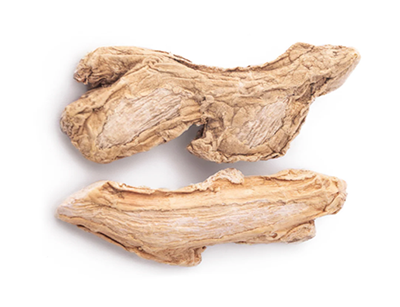
In addition to increasing blood insulin levels, Z. officinale has a secondary influence in lowering lipid levels in blood15. Elevated fatty acid levels in diabetes is a common feature due to increased lipolysis which is taken care by Z. officinale. Hence, it acts to prevent the onset of atherosclerosis, one of the major complications in diabetes.

Ocimum sanctum (TULSI)
O. sanctum promotes uptake of glucose by peripheral tissue most likely either by decreasing peripheral resistance to insulin or any other action finally resulting in promotion of insulin: receptor interaction. This accounts for the finding that it potentiates the action of all medicaments including exogenously injected insulin16, M. charantia & A. indica5. Stress is known to be a causative factor of diabetes.
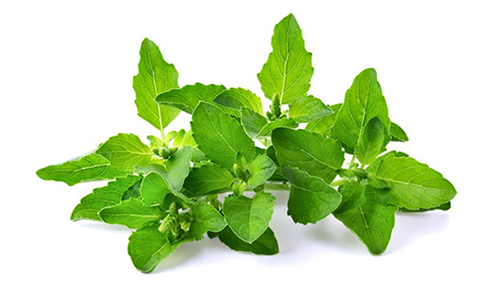
Several states of physical stress such as acute myocardial infarction, surgery, infections & severe burns & trauma associated with glucose intolerance induced by hormonal effects on glucose metabolism & insulin secretion & action12. Aggravation of hyperglycemia precipitated by stress is effectively taken care by O. sanctum which is known to possess anti-stress activity. It normalizes the stress induced neurohumoral changes17,18.

PURE Commiphora mukul (GUGGUL)
One of the major complications of untreated or under treated diabetes is elevated levels of very low density lipoproteins (VLDL) in blood circulation. The VLDL is converted in the liver to more cholesterol rich low density lipoproteins that accumulate progressively on the mucosal lining of blood capillaries with subsequent narrowing of the vessel lumina. These pathological changes contribute to one of the major complication of diabetespremature atherosclerosis. The situation may be more serious in obese patients in whom triglyceride levels are abnormally elevated.
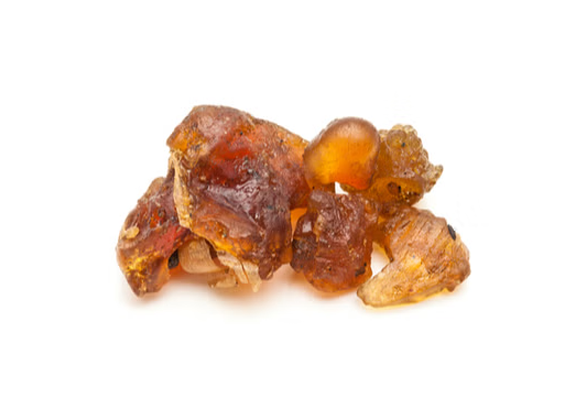
C. mukul contained in KARNIM capsules is a well known anti-cholesteremic, antihyperlipidemic28,29 agent which effectively prevents capillary thickening & subsequent pathological consequences in diabetes29. This effect of C. mukul coupled with its fibrinolytic activity also prevents retinopathy, neuropathy & gangrene which are secondary to atherosclerosis & precipitated when already narrowed blood vessels are blocked by blood clots (fibrin). One of the active principles in C. mukul is commiferin.

Picrorhiza kurroa (KUTKI)
The main action of P. kurroa in treating hyperglycemia is attributed to the bitter principles, kutkin contained in the roots. These bitter principles are known to stimulate secretion of gastrin, secretin & chotecystokinin pancreozymin which then stimulate the secretion of insulin by B-cells of pancreas19.
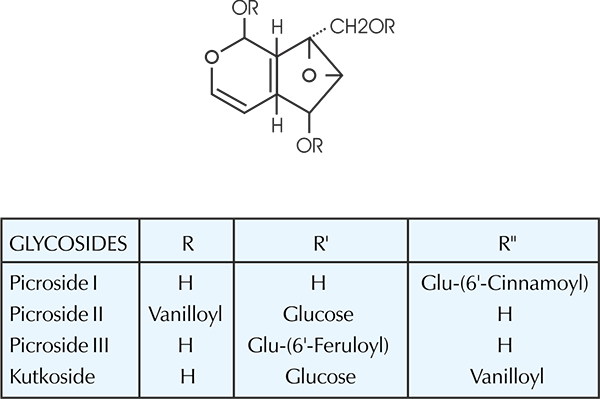
The secondary influence of P. kurroa in correcting diabetes is by its action as an immunomodulator by the iridoid glycoside fraction which increases the body's lowered immunity20,21.
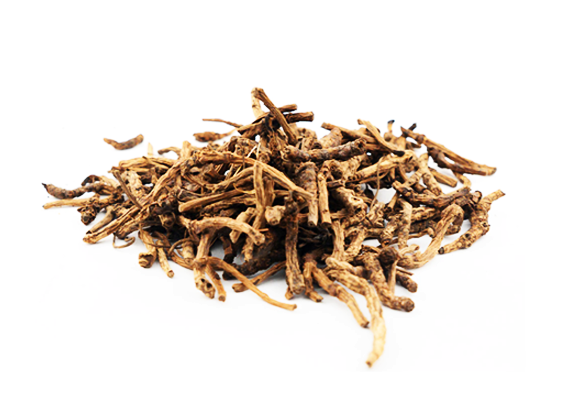
Liver plays a key role in a number of bodily functions. One of the more important roles of liver is maintaining a normal blood glucose concentration by controlling glycogenesis & glycogenolysis. Normal functioning of the liver is therefore extremely essential in maintaining glucose homeostasis in the body. Dysfunctioning of liver may lead to greatly altered carbohydrate & hence glucose metabolism. In such circumstances, a hepatoprotective & corrective agent is also required to restore normalcy of liver function especially if the patient is diabetic. P. kurroa exerts its hepatoprotective & corrective actions due to its glycosides, picrosides l & ll22,23. These glycosides have been proved to be useful in regulating liver functions & thus, could be beneficial indirectly in controlling diabetes. It is noted that reduction of liver glycogen is the prominent feature of hepatotoxicity. The disappearance of glycogen from the liver is either due to increased glycogenolysis or due to interference in glycogenesis.
Whatever may be the mechanism of glycogen disappearing from the liver, the result obtained clearly indicates that treatment with P. kurroa results in accumulation of glycogen in the liver24.
Sulfonyl urea such as glibenclamide are known to precipitate cholestasis during diabetes therapy25. It may be followed by jaundice26. Adjuvant therapy with KARNIM provides protection & prevents such toxic influence of allopathic anti-diabetics. P. kurroa, a component of KARNIM is known to induce bile secretion & thus prevents cholestasis.